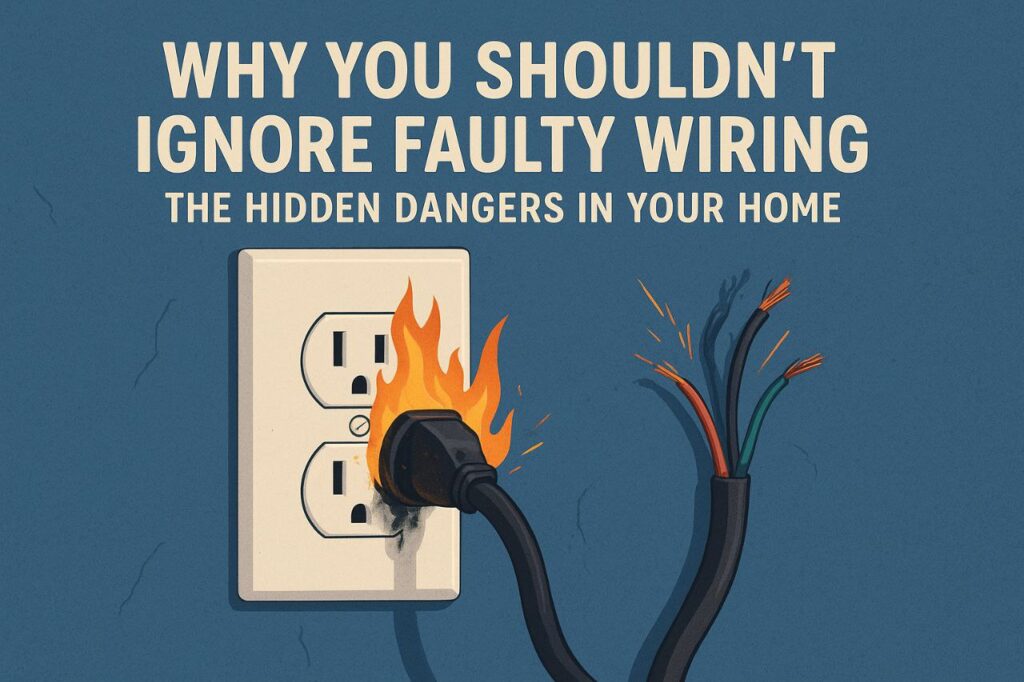
Faulty electrical wiring is one of the most common causes of electrical fires in homes across Nigeria and around the world. Yet, many homeowners overlook early signs of wiring problems, assuming they’re “normal” or not serious.
In reality, even small wiring issues can lead to expensive repairs—or worse, life-threatening accidents.
In this article, we will break down the hidden dangers of faulty wiring, the signs to watch out for, and the steps you should take to stay safe.
What Is Faulty Wiring?
Faulty wiring simply means that the electrical wires in your home are damaged, outdated, loose, overloaded, or improperly installed.
This includes:
-
Worn-out or cracked insulation
-
Loose wire connections
-
Corroded wires
-
DIY wiring mistakes
-
Wiring is not compatible with modern appliances
-
Rodent-damaged wires
Any of these can create unexpected dangers.
Hidden Dangers of Faulty Wiring
1. Risk of Electrical Fires
Faulty wiring is the biggest cause of electrical fires. When wires overheat, spark, or arc, they can ignite surrounding materials like wood, curtains, or insulation. Most common causes of electrical fires:
-
Loose connections
-
Overloaded circuits
-
Old or deteriorated wiring
-
Incorrect wiring was done by untrained technicians
This is why early detection is crucial.
2. Electric Shocks and Electrocution
Exposed or damaged wires can cause mild shocks—or fatal electrocution.
Even a small zap when touching an appliance or outlet is a sign that the wiring is not grounded properly.
You may experience shocks when:
-
Plugging appliances
-
Touching metal surfaces connected to power
-
Using water near electrical sources
This is extremely dangerous and should not be ignored.
3. Damage to Appliances and Electronics
Poor wiring sends irregular voltages to your devices.
This can fry sensitive electronics like:
-
TVs
-
Refrigerators
-
Inverters
-
Solar charge controllers
-
Laptops
-
CCTV systems
Replacing these items costs far more than fixing the wiring.
4. Higher Electricity Bills
Damaged wires waste energy because electricity is not flowing efficiently.
Signs include:
-
Sudden increase in electricity consumption
-
Appliances are getting unusually hot
-
Lights dimming randomly
Fixing faulty wiring can significantly reduce your monthly bill.
5. Frequent Power Surges
If your wires are damaged or overloaded, you may notice regular power surges. This can:
-
Burn plugs
-
Damage circuit boards
-
Reduce appliance lifespan
Surges are warning signs that the wiring needs urgent repair.
Common Signs of Faulty Wiring
If you notice any of the following, call an electrician:
-
Sparks when plugging in appliances
-
Flickering or dimming lights
-
Burning smell from outlets
-
Buzzing or crackling sounds
-
Warm or discoloured wall sockets
-
Circuit breakers that trip often
-
Outlets are not working properly
-
Rodent activity near electrical lines
These signs should never be ignored.
Why Professional Electrical Inspection Is Important
A qualified electrician can detect hidden wiring issues using tools like
-
Circuit analyzers
-
Load testers
-
Insulation resistance meters
Routine inspections help prevent:
-
House fires
-
Costly appliance replacements
-
Risk of electrocution
-
Unexpected power failures
Your home’s safety depends on clean, reliable wiring.
Conclusion
Faulty wiring is a silent danger that grows over time.
Ignoring the signs can put your home, your property, and your family at serious risk.
If you suspect wiring issues—no matter how small—they must be addressed immediately by a certified electrical technician. A safe home starts with a safe electrical system.