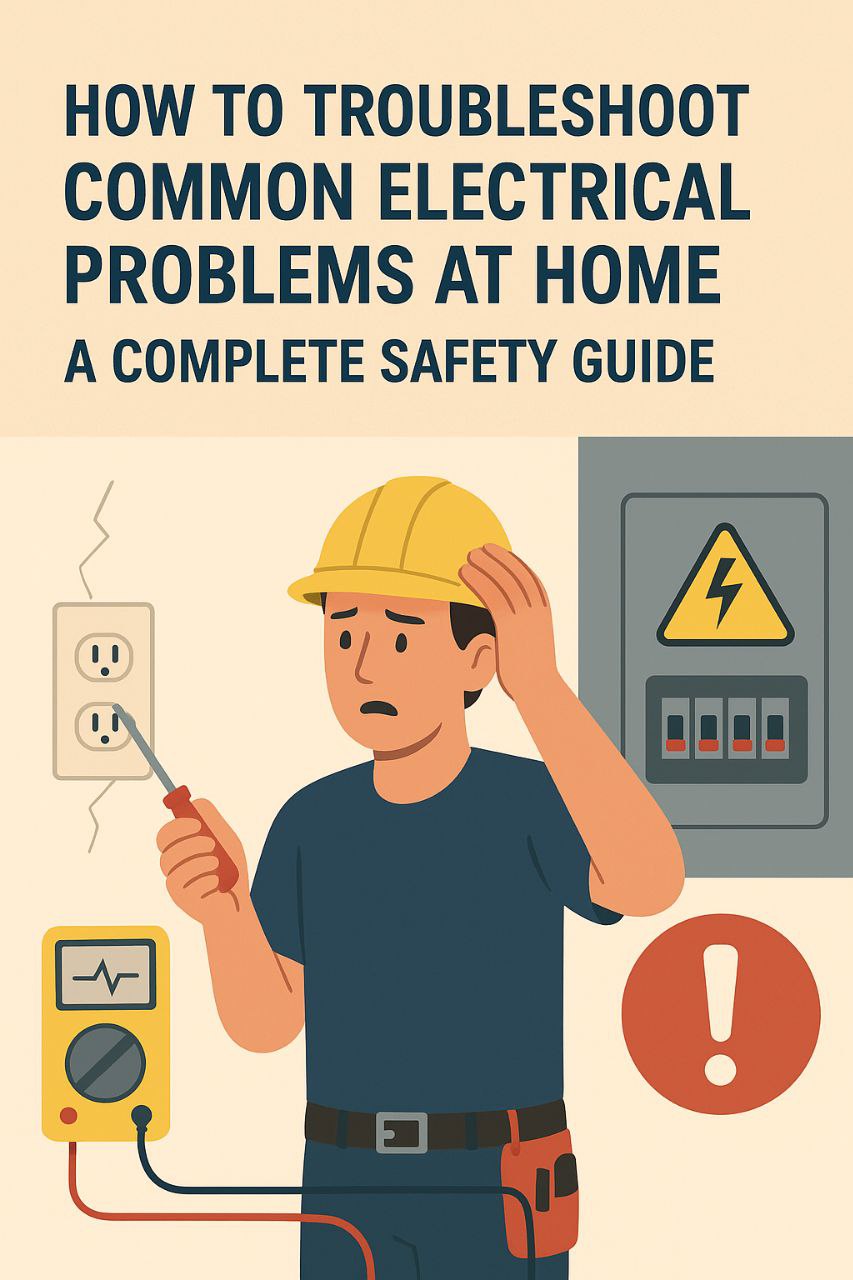
Electrical issues are common in many households, and while some problems are minor, others can pose serious safety risks if ignored. As professionals in electrical repair and installation, we’ve created this detailed guide to help homeowners identify common electrical problems safely and understand when it’s time to call a certified electrician.
Understanding the Importance of Electrical Safety
Electricity is essential for daily living, but even small faults can lead to:
-
Electrical fires
-
Equipment damage
-
Electric shock hazards
-
Power outages and fluctuations
That’s why knowing how to identify early signs of electrical issues is crucial. This guide is NOT meant to replace a professional electrician, but to help you recognise problems before they escalate.
Common Electrical Problems Found in Homes and Their Causes
Here are the issues homeowners encounter most often:
1. Frequent Circuit Breaker Tripping
A breaker that trips often means:
- Overloaded circuits
- Short circuits
- Faulty wiring
- High-energy devices drawing excess power
Tip: Avoid plugging too many heavy appliances (AC, heater, iron) into one outlet.
2. Flickering or Dim Lights
Common causes include:
-
Loose bulb connections
-
Faulty light fixtures
-
Weak wiring
-
Voltage fluctuations
If only one bulb flickers, the issue is local. If multiple lights flicker, the wiring or main supply may be faulty.
3. Burning Smell or Warm Outlets
This is a serious sign of:
-
Overheated wiring
-
Loose connections
-
Poor-quality extension boxes
-
Faulty appliances
Never ignore a burning smell—turn off the power and call a technician immediately.
4. Dead Outlets or Switches
A non-working outlet is usually caused by:
-
Internal wire break
-
Damaged terminals
-
Trip from GFCI outlets
-
Fuse or breaker failure
Avoid attempting DIY repairs—exposed wiring can be dangerous.
5. High Electricity Bills
Your energy consumption may spike due to:
-
Faulty appliances
-
Loose wiring
-
Old electrical installations
-
Leaking current
An electrical audit can help identify where the power leak is happening.
6. Sparks When Plugging Appliances
This often happens from:
-
Faulty sockets
-
Loose connections
-
Worn-out plugs
-
Overloaded power strips
Small blue sparks are normal, but yellow or continuous sparks are dangerous.
A Safe Step-by-Step Troubleshooting Guide
If you encounter an electrical problem, follow these safety-first steps:
Step 1: Turn Off the Power
Go to your main breaker and switch off the affected circuit.
Step 2: Inspect the Appliance
Check if the device itself is faulty by testing it in another outlet.
Step 3: Look for Visible Damage
Check for:
-
Burn marks
-
Melted plastic
-
Loose sockets
-
Exposed wires
Step 4: Test Other Outlets
If one outlet doesn’t work, test another along the same wall or circuit.
Step 5: Reset Your Breaker
If a breaker tripped, reset it once.
If it trips again, DO NOT force it—call a professional.
Electrical Problems You Should NEVER Try to Fix Yourself
Some issues require technical knowledge and specialised tools:
-
Damaged or burnt wiring
-
Rewiring entire rooms or buildings
-
Installing or repairing circuit breakers
-
Fixing the main distribution boards
-
Replacing underground or concealed wiring
-
Electrical shocks from appliances
-
Water-damaged electrical installations
Attempting DIY repairs on these can cause serious injury or fire.
When to Call a Professional Electrician
Contact a certified technician if:
-
Lights flicker consistently
-
Outlets stop working
-
Your breaker trips more than once
-
You smell burning or melting plastic
-
Appliances shock you
-
Cables feel hot when touched
-
Your wiring is more than 10–15 years old
-
You just moved into a new home and want a safety inspection
Professionals ensure reliable repairs and long-term safety.
Tips to Prevent Electrical Problems at Home
-
Avoid overloading power outlets
-
Use surge protectors for TVs, refrigerators, computers, and CCTV systems
-
Replace old or damaged wiring
-
Schedule a yearly electrical safety inspection
-
Use high-quality cables and sockets
-
Install proper earthing (grounding)
-
Keep water sources away from electrical components
Conclusion
Electrical faults are common, but understanding how to identify them early can prevent major damage and protect your home. While simple troubleshooting is helpful, never attempt complex electrical repairs on your own—safety should always come first.
If you need professional help with electrical repairs, rewiring, CCTV installation, or solar power systems, our team is always ready to assist.