As more homes and businesses turn to solar energy for reliable, clean, and cost-effective electricity, maintaining your solar system has become more important than ever. A well-maintained solar setup can last 20–25 years, reduce electricity bills, and deliver maximum performance all year round.
Whether you installed a small home system or a full commercial array, this guide will help you keep your solar panels running at peak efficiency.
Why Solar System Maintenance Matters
Solar panels are designed to be durable, but they’re still exposed to outdoor elements. Dust, dirt, bird droppings, and even wiring issues can reduce efficiency significantly. Proper maintenance ensures:
-
Higher power output
-
Longer lifespan of panels and batteries
-
Reduced repair costs
-
Better return on investment
-
Safety for your home or office
Neglecting your solar system can reduce its efficiency by up to 30%, which means higher electricity bills and lower energy production.
Common Problems Affecting Solar Panels
Even though solar systems work silently, they face several environmental and technical challenges:
• Dust and Debris Build-up
Dust, dry leaves, and sandstorms (common in many regions) can block sunlight from reaching the panels.
• Shading
Overgrown trees, nearby buildings, or mounted antennas can reduce efficiency.
• Loose Wiring or Faulty Connections
Poor electrical connections can cause overheating, voltage drops, or intermittent power loss.
• Bird Nests
Birds often build nests under solar panels, damaging wiring or blocking airflow.
• Weather-related Damage
Heavy winds, hail, or extreme heat can weaken panel frames or affect performance.
How Often Should You Maintain Your Solar System?
A general guideline:
-
Basic cleaning: Every 3 months
-
Full inspection: Every 6 months
-
Battery health check (for off-grid systems): Every 2–3 months
-
Professional servicing: Once every 12 months
If you live in a dusty area, near a busy road, or experience frequent harmattan seasons, cleaning may be required more often.
Step-by-Step Solar Panel Cleaning Guide
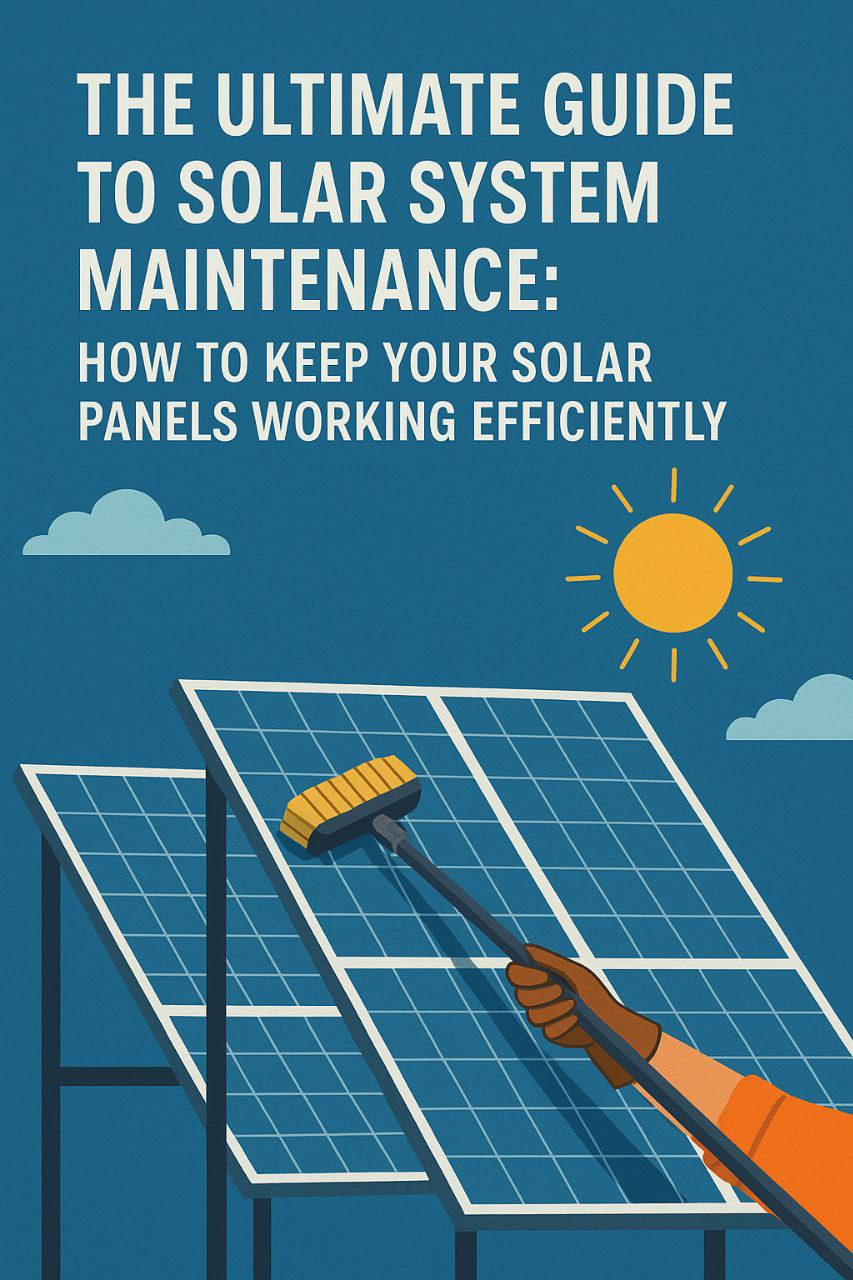
Cleaning your solar panels is the simplest way to improve performance. Follow these safe steps:
Step 1: Turn Off the Solar System
Before touching any component, shut down:
-
the inverter
-
the DC isolator
-
and disconnect the load if necessary
Step 2: Rinse With Clean Water
Use a hose to gently remove dust and debris. Avoid high-pressure water jets.
Step 3: Use a Soft Brush or Sponge
Apply mild soapy water and scrub gently. Never use harsh chemicals or abrasive materials.
Step 4: Rinse and Let It Dry
Allow the panels to air-dry. Avoid wiping with a cloth to prevent streak marks.
Step 5: Inspect for Damage
Check for:
-
cracks
-
broken glass
-
loose wires
-
discoloration
-
shading issues
If anything looks unusual, contact a professional technician immediately.
Battery and Inverter Maintenance Tips
If your system includes batteries (24V/48V setups), they require special attention:
Battery Care
-
Check electrolyte levels (for wet-cell batteries)
-
Ensure terminals are clean and free from corrosion
-
Avoid full discharge below 20%
-
Maintain proper ventilation to prevent overheating
Inverter Care
-
Keep it in a cool, dust-free environment
-
Clean air vents regularly
-
Watch for unusual noises or error lights
If your inverter frequently switches to bypass mode, it may indicate system overload or wiring issues.
How to Know Your Solar System Needs Attention
Watch out for the following signs:
-
Reduced power output (your batteries charge more slowly than usual)
-
Inverter error warnings
-
Panels look visibly dirty
-
The system shuts down during peak sunlight
-
Battery backup time has reduced
-
Frequent tripping or voltage fluctuations
These symptoms indicate your system needs an immediate check-up.
When Should You Call a Professional?
You should contact a certified solar technician if:
-
Your system is underperforming, and cleaning doesn’t help
-
You notice electrical burn smells or heating
-
There are signs of water leakage in wiring or junction boxes
-
Panels show cracks or structural damage
-
Birds or rodents have chewed the cables
-
You need to expand your existing system
A professional inspection ensures safety and prevents long-term damage.
Tips to Extend the Lifespan of Your Solar System
Here are expert recommendations to expand the lifespan of your solar system:
-
Install bird guards to prevent nesting
-
Trim nearby trees regularly
-
Use high-quality surge protectors
-
Install lightning arrestors (especially in areas with frequent storms)
-
Keep batteries well-ventilated and avoid overloading
-
Update your inverter when adding more panels
Consistency is the key to long-term solar performance.
Conclusion
Your solar power system is a long-term investment—one that can save you money, reduce dependence on the grid, and provide reliable electricity for many years. With regular maintenance, proper cleaning, and periodic inspections, you can ensure your system operates efficiently and safely.
If you ever notice unusual performance or need professional assistance, always consult a qualified solar technician.